
Understanding and optimizing these six factors can turn transportation costs from an unavoidable expense into a strategic competitive advantage for your business.
- Distance traveled: Implementing route planning software can reduce costs by 10-30% by optimizing routes and consolidating shipments
- Weight and volume of goods: choosing efficient packaging and correctly calculating the volumetric weight (Length × Width × Height / 4500) prevents overcharging
- Fuel price: proper vehicle maintenance and ecodriving courses reduce fuel consumption by 10-15%, saving 30-40% of the 30-40% of total costs
- Additional fees: Negotiating terms and planning documents prevents hidden costs that can amount to 3-15% of the total expenditure
- Vehicle type: Choosing the right vehicle for your specific requirements avoids 20-40% depreciation in the first year and optimizes operational efficiency
- Downtime: Efficient organization of loading/unloading avoids extra 50-100 RON/hour charges and maximizes fleet productivity
These factors do not act in isolation - an integrated approach delivers the best results, turning transport optimization into a long-term growth strategy.
What is the fastest way to reduce road transport costs in 2026?
Start with the factors you can control immediately: routing (km), loading (volume/taxable weight), and dwell times. Then optimize variable costs (fuel, taxes) through planning and clear clauses in the offer.
Road freight transportation is a significant expense for any business involved in the supply chain. In fact, transportation costs can make up between 40% and 70% of a company's total operational expenses, including driver's remuneration and fuel costs.
In recent years, we have seen dramatic fluctuations in this sector. In order to protect budgets, more and more companies are explicitly aiming to reduce logistics costs through planning, real-time monitoring and renegotiation of key components of freight rates.
After the pandemic, the price of diesel increased by 50%, and the conflict in Ukraine added almost 50% more. Therefore, understanding freight rates becomes essential to effectively manage any company's logistics budget.
Why have rates increased in recent years?
Rising diesel prices, geopolitical volatility and new road/CO₂ taxes have increased the cost/km and operational costs of fleets. At the European level, the impact is amplified by policies such as the Belgian heavy vehicle road tax, which directly influence the price per kilometer of freight transport on international corridors.
In this article, we will analyze the six main factors that influence transportation costs in 2026. From the distance traveled to the type of vehicle used, these factors directly determine the final price you will pay. For example, in Bucharest, a simple transport with an 11m³ van starts at 150 RON, while for a 20m³ van, the price reaches 350 RON. However, costs vary significantly depending on several parameters, which we will detail below.
Distance traveled
How does the distance traveled influence the cost of transportation?
Distance is one of the most important factors in setting rates for road freight transport.
Correct route planning allows for a stable freight price per kilometer, including for domestic segments with 3.5-ton trucks, where many companies publish benchmarks such as freight price per kilometer for 3.5-ton trucks in 2026.
When analyzing transportation costs, the first element that comes to mind is usually how many kilometers must be traveled to get the goods from point A to point B.

Factor description: Distance traveled
In the transport industry, distance traveled refers to the total number of kilometers a vehicle travels to deliver goods from shipper to consignee. Usually, this factor is calculated from a minimum value of 100 kilometers. For orders requiring travel over shorter distances, many transport companies apply flat rates for the entire journey, regardless of the exact mileage.
Accurate distance calculation is essential for efficient transportation planning. Logistics companies use various specialized tools, such as distance calculators and route planning applications, to determine the most efficient route between origin and destination. These tools consider not only the direct distance, but also factors such as:
- Type of roads (highways, national roads, secondary roads)
- Border crossing points (for international transport)
- Traffic restrictions for certain types of vehicles
- Tolls applicable on the chosen route
Impact on transportation cost
Distance has a direct influence on the cost of road haulage, as there is a proportional relationship between the number of kilometers covered and the final price. In general, transport companies set a tariff per kilometre, which is based on the total distance.
As an example, many transport companies charge about EUR 1 per kilometer for distances of more than 100 km, calculated on a one-way basis only (no round-trip charges). Thus, for a 300 km transport, the estimated cost would be EUR 300, not including any additional charges.
Distance is not the only cost factor. Intermodal freight transport (combining road, rail or waterborne transport) is on average 56% more expensive than the road-only alternative. On the other hand, intermodal transport can offer significant benefits in terms of environmental impact by reducing greenhouse gas emissions, which currently account for almost a quarter of total emissions in Europe.
To better understand the impact of distance on costs, many logistics operators calculate the cost per kilometer using the following formula:
Cost per kilometer = (Fuel + Road tolls + Salaries + Maintenance) ÷ Total kilometers driven
For example, for a truck driving 1,000 km with costs of €300 for fuel, €50 road tax, €200 wages and €50 maintenance, the cost per kilometer would be (300 + 50 + 200 + 50) ÷ 1,000 = €0.60/km
Distance optimization strategies
Distance optimization is an effective way to reduce road transportation costs. By consolidating loads and intelligent routing, suppliers can offer complete transportation on similar routes, reducing empty kilometers and supporting the reduction of logistics costs at the fleet level. Here are some proven strategies:
- Implement route planning software - Advanced algorithms can identify the most efficient routes, taking into account factors such as traffic, road restrictions and delivery times. Studies show that businesses using such solutions can save up to 20% on transportation costs.
- Consolidate shipments - Instead of sending multiple partially loaded trucks on similar routes, consolidating loads can significantly reduce the total distance traveled. For example, one dairy supplier was able to reduce travel distance by 27% by optimizing routes.
- Assessing alternative routes - The shortest route is not always the most economical. In the words of Peter Drucker: "Logistics is not about going the right way, but the most convenient way". Sometimes a seemingly longer route can avoid areas with heavy traffic or high tolls.
- Using real-time data - Up-to-date information about traffic conditions and road conditions allows routes to be dynamically adjusted to avoid delays. Research shows that route optimization based on real-time data can reduce travel time by up to 25%.
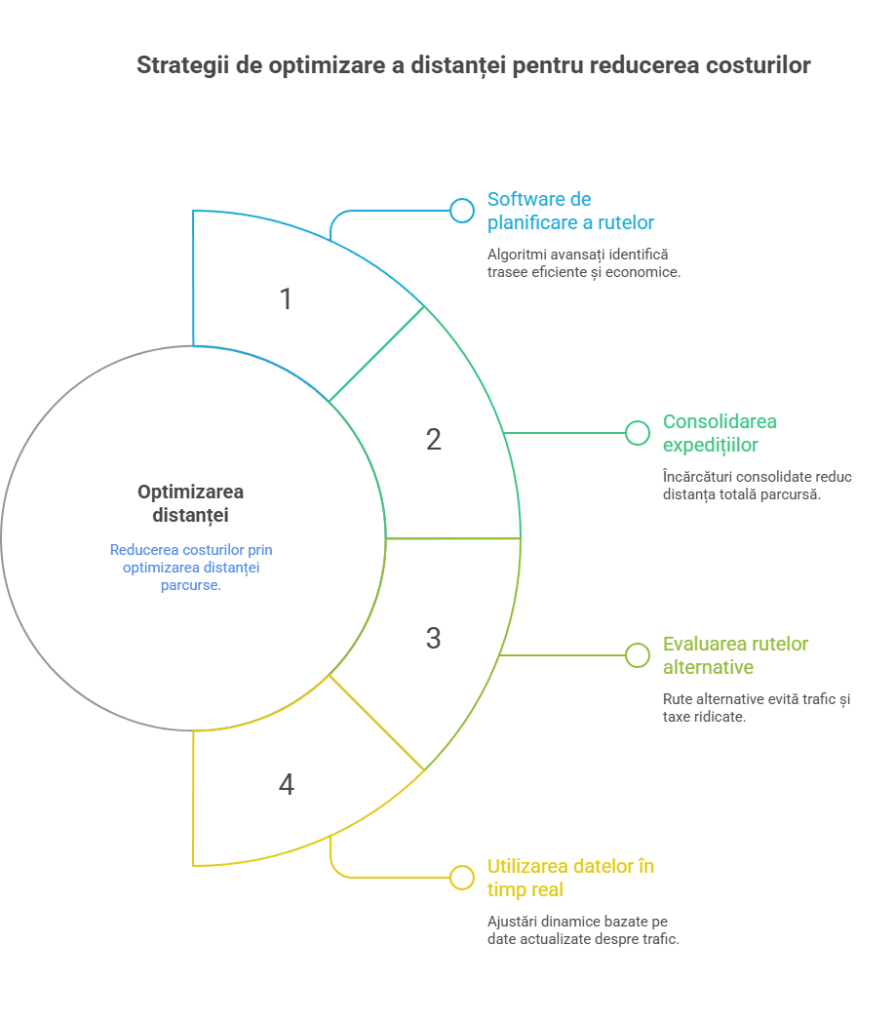
According to studies, companies that implement route optimization strategies can reduce transportation costs by about 10-30%. For example, Musgrave's reported a 27% reduction in travel distances and a 20% decrease in transportation costs.
In order to achieve optimal results in route planning, it is essential to analyze past transportation data and use advanced mapping tools. This process helps identify the most efficient routes tailored to the specific needs of each business.
Weight and volume of goods
How do weight and volume affect the cost of transportation?
In the logistics industry, the dimensions and weight of transported goods are decisive factors in calculating final costs. In fact, in freight transport, knowledge of the weight and volume of goods is essential for efficient planning.
Factor description: weight and volume of goods
When we talk about road freight transport, we need to understand two fundamental concepts: physical weight and volumetric weight. Physical weight is how much a parcel actually weighs, measured in kilograms. By contrast, volumetric (or dimensional) weight is a pricing technique used by carriers to estimate the space taken up by a parcel during transportation.
To determine the chargeable weight, transportation companies apply the following principle: the tariff is calculated in relation to the higher of the physical weight and the volumetric weight. This approach is necessary because there are consignments of large parcels, not very heavy, for which the volumetric weight exceeds the actual mass.
The formula for calculating the volumetric weight is:
Gv = (Length × Width × Height) / Volumetric factor
Where parcel sizes are expressed in centimeters and the volumetric factor varies according to the type of service:
- Express Services: 4000
- Standard Services: 4500
For example, for a parcel of 5 kg actual weight and dimensions 50 × 40 × 30 cm, according to the volumetric weight calculation for a standard service, it would be 50×40×30/4500, i.e. 13.33 kg volumetric. Therefore, the weight taken into account for invoicing would be the volumetric weight, being greater than the physical weight.
Impact on transportation cost
Transportation costs are no longer determined solely by how much the package weighs. If you've ever been surprised by high shipping charges for a light but bulky item, you've probably encountered prices based on dimensional weight.
Most domestic courier companies do not include fractional weights in their offers. In the B2B segment, these rules form the basis of a predictable freight rate, part of a complete road transport offer, in which volumetric weight is taken into account to efficiently use space.
According to standard practices, shipping charges are made on a per kilogram basis – there is a standard rate for the first kilogram, to which a fixed fee is added for each additional kilogram.
If a parcel has a weight of "n" kilograms and a difference expressed in grams of up to 500 grams, the weight taken into account will be "n". If, however, it exceeds 500 grams, the value taken into account shall be 'n+1'.
Furthermore, the size of the parcel is a major factor in how transportation rates are calculated. Even if the package is light, a large box can significantly increase transportation costs because of the space it takes up in a delivery vehicle. This method of calculating costs has the following implications:
- Large boxes with low actual weight are charged according to volumetric weight
- Small and dense packages are often loaded on actual weight
- Oversized parcels may incur additional handling costs
Also, for cargo transport services (goods on trucks), the rates are calculated according to the weight of the goods, their dimensions and the number of kilometers covered.
Load optimization strategies
Making the process of loading goods into vehicles more efficient can bring substantial savings. First, it is essential to respect existing volumetric and weight restrictions.
Among the most important optimization issues are:
- Vehicle center of gravity - Modern algorithms evenly distribute cargo boxes and always place the center of gravity between the driving axles
- Available volume in vehicles - Optimize space by strategically organizing cargo
- Maximum weight - Compliance with load limits for safe transportation
For effective optimization, you can use the following strategies:
Keeping packaging tight and efficient can significantly reduce transportation costs. Accurately measuring packages and selecting packaging that closely matches the items being shipped are also proven ways to reduce costs.
Another optimization method is to plan routes correctly according to vehicle load. When planning transportation, ensure that each vehicle is loaded to its maximum capacity to reduce the number of trips and improve operational efficiency.
The benefits of effective planning include:
- Reducing the number of trips by maximum load
- Lower CO2 emissions through reduced fuel consumption
- Minimize the risk of damage by avoiding unstable loads
Specialized load planning software can effectively place goods into trucks and containers in seconds, respecting all applied constraints. Thus, fleets reduce underloaded runs and achieve lower truck fuel costs, with a direct effect in reducing monthly logistics costs.
These systems can tell you how many feet of clearance are left in your chosen cargo space, allowing you to choose a smaller truck or utilize unused space by adding additional cargo.
Optimizing loading also means reducing the number of journeys made by machines whose transport capacity is not fully exploited. This considerably reduces fuel consumption and related costs.
Fuel prices
What additional charges can increase the final cost of transportation?
Fuel is one of the major expenses in road freight operations, and price fluctuations can significantly affect the profitability of logistics companies. In the current context, efficient management of this factor becomes essential to remain competitive in the market.
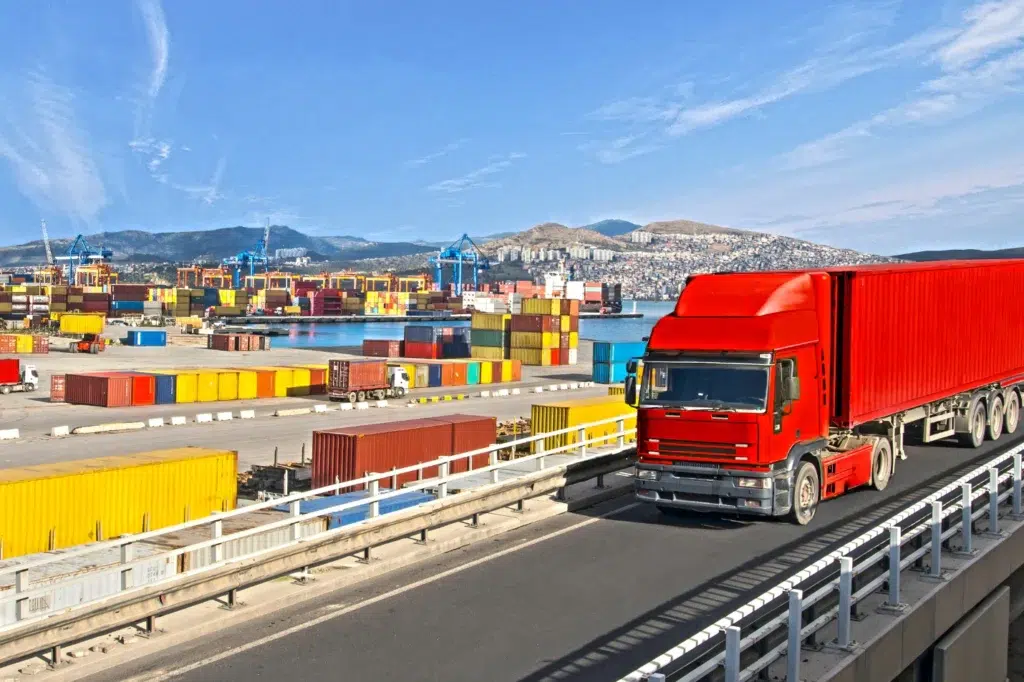
Fuel prices
Fuel is a major cost for every truck fleet, therefore, minimizing consumption is a priority for any operator. The implementation of preventive maintenance programs and ecodriving training support low truck fuel costs, stabilizing the price per kilometer of freight transport in the medium term. The share of fuel expenses in the total costs of a transport company varies between 20% and 30%, depending on the price of oil and fluctuations in global markets.
Over the last 12 months, fuel prices in Romania have followed a marked upward trend. This trend has been influenced by a combination of internal and external factors, including high global demand, exchange rate fluctuations and increases in taxes and excise duties. Since 2024, drivers in Romania have had to cope with significant increases, in particular in January and July, when higher excise duties were introduced.
On the domestic market, prices have risen on average by 8-10% just due to the increase in the price of diesel, but it is important to note that this factor is only one component of the total transportation tariff. To determine the real impact of fuel price fluctuations, companies use various calculation methods such as the Diesel Adjustment Factor (DAF).
Impact on transportation cost
Over 80% of fleet managers indicated fuel consumption as the most costly maintenance issue. This is not surprising given that for road transport companies, fuel costs can represent 30-40% of total costs.
The impact of fuel prices on transportation costs manifests itself in several ways:
- Increased cost per kilometer - directly affecting transport fares and reducing profit margins, especially on long journeys
- Impact on the supply chain - goods become more expensive to transport, which can lead to price increases for food and other essential goods
- Effects on competitiveness - companies that cannot manage fuel consumption efficiently risk losing market share to more efficient competitors
Let's take a concrete example: a vehicle with tires under-inflated by only 1 bar can generate additional costs of about 900€ per year per vehicle. Also, a simple calculation shows that a fleet of 10 vehicles driving 10.000 km/month each, with an average fuel consumption of 35l/100km and a fuel price of 6 lei/liter, can save about 6.300 lei/month by a reduction of only 10% in consumption.
Strategies to reduce fuel consumption
Given the significant impact of fuel prices on total transportation costs, the implementation of effective strategies to reduce consumption is becoming a necessity. Here are some proven methods:
Proper vehicle maintenance
- A well-maintained vehicle consumes 10-15% less fuel than a neglected one
- Under-inflated tires can increase fuel consumption by up to 8%
- Clogged air filter can increase fuel consumption by 5-10%
- Incorrect alignment can increase consumption by 3-5% due to additional resistance
Choosing the right tires
- Low rolling resistance tires such as FUELMAX ENDURANCE, FUELMAX GEN-2 and FUELMAX PERFORMANCE are specifically designed to reduce fuel consumption
- Tire pressure monitoring through solutions such as TPMS, CheckPoint and DrivePoint can ensure optimal tire pressure is maintained
Optimizing routes and driving style
- Deployment of professional monitoring systems allows real-time tracking of critical parameters: instantaneous consumption, driving style and routes traveled
- Companies using these solutions see significant improvements in the first months of implementation
- Ecodriving courses can significantly reduce fuel consumption by learning how to make the best use of the vehicle
Alternative fuels
- Some companies are turning to alternative fuel systems such as compressed natural gas (CNG), liquefied natural gas (LNG), propane autogas or hybrid solutions
- It is estimated that by 2026, the number of natural gas refueling stations globally will reach almost 39,300 locations
Modern technologies
- Refrigeration units equipped with solar panels have enabled some companies to reduce unit consumption by up to 15% over a year
- Telematics technologies provide advanced tools to accurately monitor consumption and identify waste
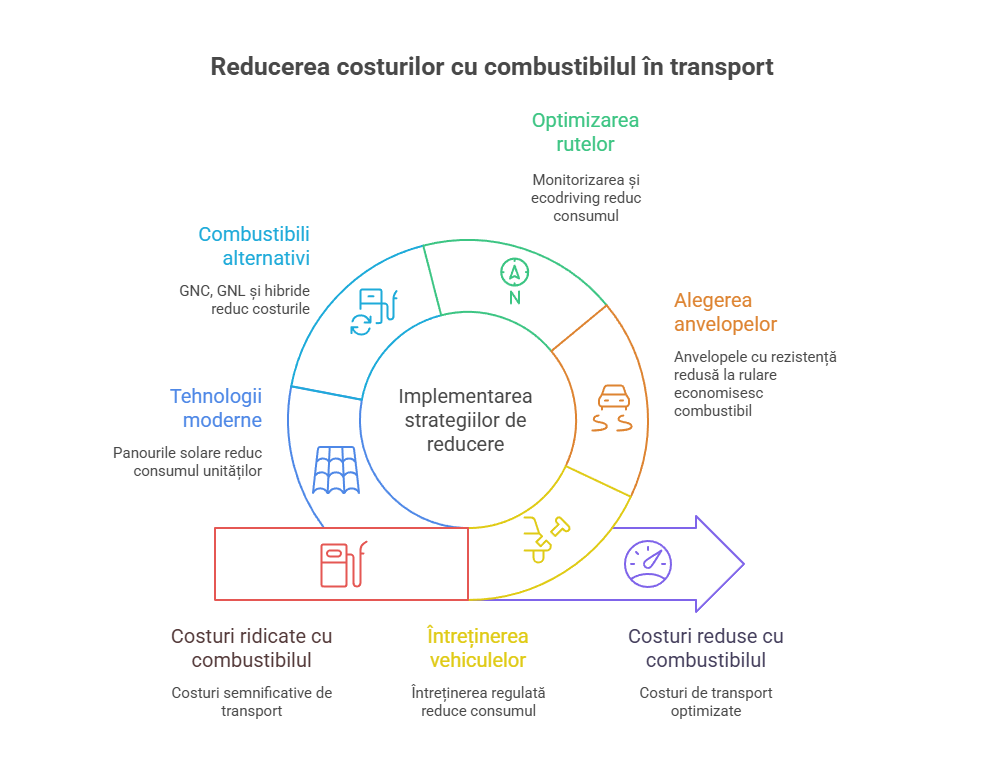
Therefore, while fuel price is an important factor in determining the cost of road freight transport, there are many strategies that companies can use to reduce its impact on total costs and remain competitive in the market.
Additional fees and charges
What additional fees can increase the final cost of shipping?
In addition to basic costs, an essential factor influencing the final price of road freight transport is represented by additional taxes and fees .
Documentary planning and verification of crossing points minimize unforeseen costs in transport and maintain a fair freight transport rate, including on toll corridors for heavy vehicles Belgium
These expenses, although often underestimated in the planning stage, can end up representing between 3% and 15% of carriers' total expenses.
Additional fees and charges
Additional fees and charges include a wide range of costs in addition to the basic transportation fare. Among the most common are:
- Tolls and vignettes - applied according to country, vehicle category and distance traveled
- Customs duties - for international transport
- Handling fees - related to loading, unloading and moving goods
- Heavy Goods Vehicle (HGV) levy, reintroduced from August 2023
- Administrative costs - for documentation and processing
Starting in 2026, we have noticed significant changes at the European level that directly impact transportation costs. For example, Hungary has indexed its infrastructure tax by 3.4%, Austria has increased road tolls for trucks by 12.5%, and Poland has expanded its toll road network by another 1,600 km.
Many European countries have also introduced taxes related to CO₂ emissions. Germany implemented such a tax for trucks over 7.5 tons as early as December 2023, and in 2026, the CO₂ tax applied to fuels in Austria increased to €55/ton, leading to a €0.026/liter increase in the price of diesel.
Impact on transportation cost
Additional fees and charges can represent a significant portion of total transportation costs. Road tolls and vignettes account for between 3% and 15% of total operational expenditure, while other zonal charges account for less than 1% of expenditure and temporary storage costs between 1-2% of total expenditure.
For hauliers operating in countries such as Germany, Austria or Hungary, road costs have risen by at least 18% in recent years, bringing total operating costs to around €1.26/km.
In Romania, the toll changes will come into force in 2026, with an estimated increase of up to six times for trucks on Romanian national roads and highways. These changes will have a significant impact on operational costs, with a minimum increase of 10%.
Strategies to avoid unexpected costs
The following strategies can be implemented to reduce the impact of additional taxes and charges on total transportation costs:
First of all, negotiating the terms that influence total costs is essential. In addition to basic tariffs, issues such as cargo insurance, customs duties and handling costs, which can represent a significant part of the costs, need to be negotiated.
Also, asking for a detailed list of all charges included in the final price can prevent unpleasant surprises. Many carriers do not explicitly mention all additional costs in the initial offer.
For international shipments, planning the necessary documents in advance and working with an efficient customs broker can significantly reduce the risk of paying demurrage or detention fees due to delays in customs clearance.
It is therefore vital to ask for all-inclusive offers and carefully read the contracts and general terms and conditions of carriers. Establishing clear and advantageous Incoterms and checking invoices regularly for unexpected surcharges are recommended practices to avoid hidden costs.
Type of vehicle used
Choosing the right vehicle is a strategic factor in the road freight transportation cost equation. In recent years, the fleet structure for freight transport in Romania has undergone significant changes, reflecting the adaptation to the new economic and logistical realities.
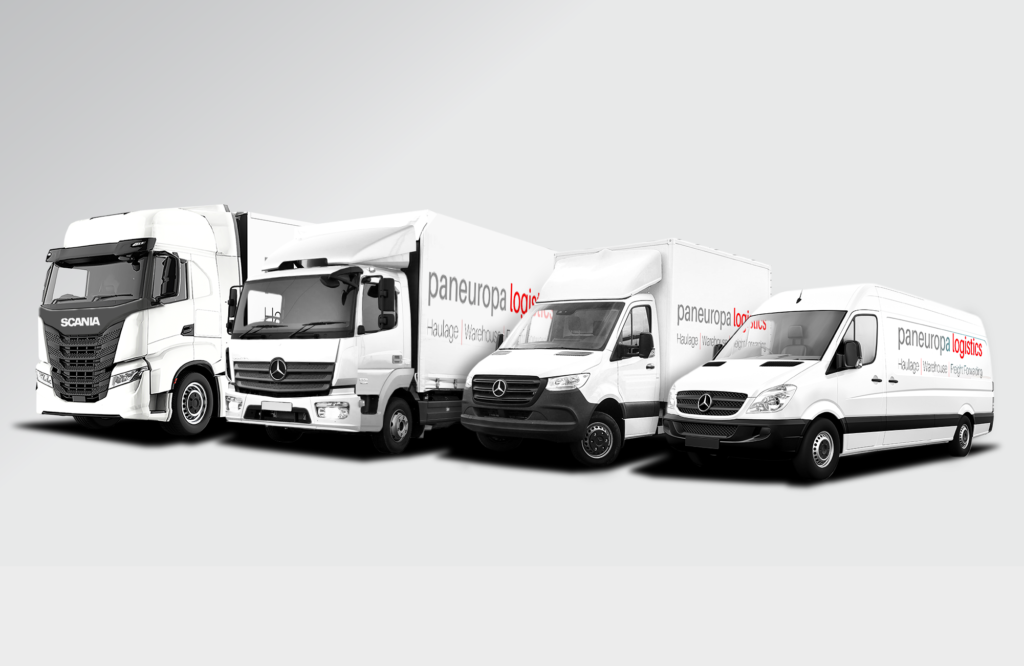
Factor description: Type of vehicle used
The road haulage fleet includes several categories of motor vehicles: vans, specialized trucks, tractors and self-haulers. Their structure in terms of maximum mass falls into three main categories: N1 (59%), N2 (10%) and N3 (31%). This distribution marks a fundamental change from the structure in 1991, when the N3 category dominated the market with 62%.
There is a clear trend towards light vehicles, which can be explained by changes in the structure of goods transported. The share of light vans increased from 45.9% in 1991 to 79% in 2001. This trend has continued in subsequent years, reflecting market demands for more flexible and faster deliveries.
In terms of age, the estimated average age of goods vehicles is 10.3 years, with notable differences between categories: 9 years for vans, 9.2 years for tractors, 15.5 years for specialized trucks and 17.8 years for self-haulers.
Impact on transportation cost
The type of vehicle directly influences operational costs through several mechanisms. The correct selection between 3.5 t vans, 2/3 axle trucks or refrigerated trucks ensures adequate road freight transport and an optimal freight transport price per kilometer for the type of cargo.
First, the size and weight of the vehicle have a direct impact on transportation costs – larger and heavier vehicles require more space and resources, generating higher rates compared to smaller vehicles.
Also, statistically, new trucks depreciate by 20-40% in the first year alone, which is a significant factor in the long-term investment evaluation. This accelerated depreciation directly affects the total cost of ownership and therefore the rates charged.
The choice between a 2- or 3-axle truck also has considerable financial implications:
- 2-axle trucks: lighter, lower fuel consumption, lower maintenance costs
- 3-axle trucks: higher fuel consumption due to extra weight and rolling resistance, higher maintenance costs
As an example, the average cost per kilometre for a 7.5 tonne truck covering about 160,000 km/year comes to €0.312/km, including all operational costs.
Strategies for choosing the right vehicle
In selecting the optimal vehicle for freight operations, it is essential to evaluate the following aspects:
- Matching truck type to service requirements - the right choice can significantly reduce operating expenses and fuel costs. Different types of trucks (open platform, refrigerated, box trucks) are adapted for specific tasks.
- Assessing the pros and cons of new versus used vehicles - new vehicles offer the benefits of warranty and modern technology, but incur significant upfront costs, while used vehicles are a cost-effective alternative, although they may require more frequent maintenance.
- Reliability and brand reputation - companies that choose reputable and reliable truck models experience less downtime and improved logistics efficiency.
- Optimum load capacity - it's crucial to balance maximum transportable weight with fuel efficiency.
- Safety features - modern vehicles equipped with advanced safety systems reduce the risk of accidents and, therefore, their associated costs.
Therefore, while it may seem tempting to choose cheaper vehicles initially, careful consideration of all these factors can lead to significant long-term savings and greater operational efficiency.
Time to stop and delivery
How does dwell time affect cost and on-time performance?
The efficiency of road freight transport depends significantly on the management of loading and unloading dwell time. With precise organization, every minute saved turns into profit, especially in logistics where time is money.
Factor description: dwell and delivery time
Stopping time refers to the period during which the vehicle remains stationary for the loading or unloading of goods. Normally, transport companies offer a free period of standstill - about 1 hour for domestic and 2 hours for international transport. After this time, carriers apply additional charges.
Implementing modern GPS systems to monitor these times has become standard industry practice. As a result, each of a fleet's vehicles can be tracked in real time, providing accurate data on the duration of cargo handling operations.
Impact on transportation cost
Exceeding the free parking time incurs considerable additional costs, ranging from 50-100 RON for each additional hour. However, the economic impact goes beyond these direct charges.
As immobilized vehicles do not generate revenue, long delays affect the overall profitability of the operation. Thus, every hour of unplanned downtime represents a financial loss for the haulier, which has to cover fixed costs such as salaries and vehicle depreciation.
Time efficiency strategies
To reduce downtime and delivery times, companies are implementing various solutions:
- Optimize transport routes - Modern algorithms can identify the most efficient routes, reducing total delivery time and associated costs. Customers report time savings of between 30 minutes and 2 hours daily by using specialized software.
- Transport Management Systems (TMS) - These platforms centralize information, manage orders and monitor team performance, facilitating efficient coordination of operations.
- Staff training - Training employees in fast cargo handling techniques is a crucial aspect of reducing loading/unloading times.
In addition, applying cross-docking methods can significantly improve stock rotation, eliminating intermediate storage steps and speeding up delivery time to the final destination.
Precise scheduling of loads and the creation of dedicated areas for these operations also help minimize interference with other logistics activities.
Conclusion
Understanding the factors that influence road transport costs is undoubtedly the key element for any business involved in the logistics chain. As we have seen, the distance traveled, the weight and volume of the goods, the price of fuel, additional charges, the type of vehicle and the dwell time are the six fundamental pillars that determine the final price of the transport.
Each of these factors can be optimized through specific strategies. Implementing advanced route planning software can reduce distances traveled by up to 27%. Similarly, choosing space-efficient packaging minimizes costs associated with volumetric weight. Proper vehicle maintenance and driver training for economical driving can reduce fuel consumption by 10-15%.
Taken together, these factors do not act in isolation, but influence each other. Therefore, their integrated approach gives the best results. For example, a lighter vehicle consumes less fuel, pays lower road tolls and can access areas restricted to heavy vehicles.
Companies that manage to balance all these factors will enjoy significant competitive advantages in 2026. Additionally, adapting to new technologies and environmental regulations is becoming essential in a context where sustainability is gaining ground.
The price of road freight should not be viewed simply as an unavoidable expense, but as a strategic area where optimization can bring substantial savings. By combining technology, training and load optimization, companies can obtain complete road transport with a clear freight rate, reducing unforeseen transport costs and guaranteeing low truck fuel costs. By applying the strategies presented for each factor, you can turn logistical challenges into opportunities for growth and efficiency for your business.
Frequently Asked Questions (FAQ)

Founder and CEO of Paneuropa Logistics
I am György Bokor, Founder and CEO of Paneuropa Logistics. I have been active in the logistics industry for more than 20 years, focusing on international transportation, freight forwarding, last-mile deliveries and customs services. I am passionate about developing efficient solutions that connect businesses across Europe.