
International delivery times from Romania to the EU depend on infrastructure, traffic conditions, vehicles and customs regulations. Find out how these can be optimized for fast and secure deliveries.
Main factors influencing delivery time:
- Quality of the road network and crossing points;
- Type of vehicle (standard, refrigerated, mega-trailer);
- Weather and seasonality;
- Customs regulations and country of destination;
- Logistics optimization through modern systems (TMS, GPS).
Road transport is the backbone of Romanian exports, accounting for more than 70% of all goods shipments to the EU. Its flexibility, extensive coverage and competitive costs make it the preferred mode for small and large companies. Below, we reveal how the system works and how it can be improved.
When it comes to the transportation of goods between Romania and various countries in the European Union, delivery time is a crucial factor for companies that rely on efficiency and promptness. At Paneuropa Logistics, we offer a general delivery time of 24-48 hours to most destinations in the European Union. However, it is important to understand that this delivery time can vary depending on a number of factors that influence transportation logistics, road conditions and customs regulations.
In this article, we will explore which factors can influence the delivery time from Romania to different destinations in the European Union, explaining how these variables can contribute to fluctuating lead times and why it is important to have clear and constant communication with your transportation service provider.
Road infrastructure in Romania and international transport routes
One of the most obvious factors influencing delivery time is the distance and route chosen for transportation. Even though all EU countries are relatively accessible from Romania due to the developed road infrastructure, the delivery time will vary depending on how long the distance is and the type of road traveled.
Romania benefits from an extensive road network covering more than 86,000 km, of which about 950 km are highways. In this context, the main international corridors linking Romania to the European Union are essential for the flow of goods.
For closer destinations, such as Hungary, Bulgaria or Austria, deliveries can be made within a shorter timeframe, as the distances are relatively short and there are efficient highways allowing fast transportation. On the other hand, for countries further away, such as Spain, Italy or Sweden, the delivery time can be influenced by the length of the route and the complexity of the route, reaching 24-48 hours.
Corridor IV (DN7/A1), which connects Bucharest to Budapest(Hungary), and continues to Germany and Austria, is a vital road for road transport in Romania. Transit time on this corridor is estimated at 24-36 hours to Hungary and 48-72 hours to Germany. However, there are critical bottlenecks, such as congestion on the Bucharest-Pitești sector and at the Nădlac 2 customs crossing, where delays can reach 2-3 hours at peak times.
Other important routes include Corridor IX (DN5/A2), which connects Constanta with Bulgaria (via the Giurgiu-Ruse customs) and continues to Greece or Turkey, and Corridor VII (DN6), an alternative route through Serbia and Croatia that links Romania to western Europe.
For example, a shipment to Spain includes crossing several borders and areas with heavier traffic, and this can extend the estimated delivery time. In such cases, deliveries can take up to 48 hours, depending on the specific road conditions.
Traffic conditions and road infrastructure
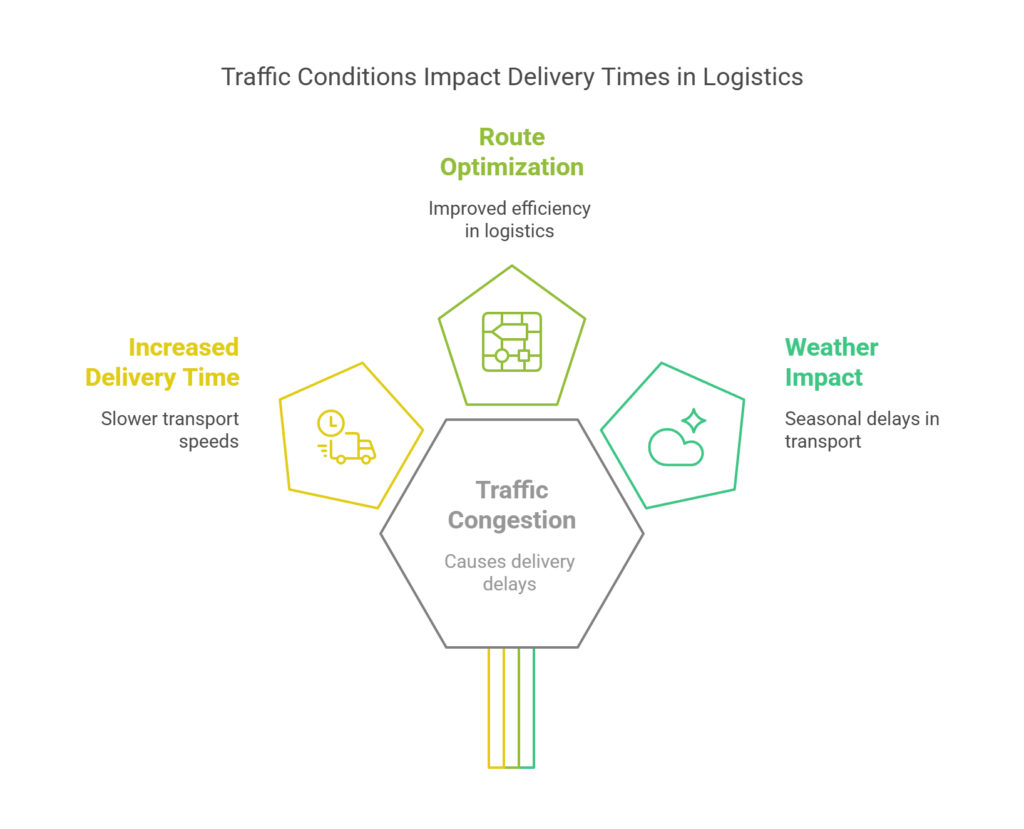
Another significant factor influencing delivery time is the condition of the road infrastructure and traffic in various countries. Although the highway networks in Europe are generally excellent, there are certain areas where traffic can become a problem. In large cities or on routes connecting European capitals, traffic congestion can delay deliveries.
Road conditions can also vary according to the weather and the season. For example, in winter, extreme weather conditions such as snow or frost can occur in colder parts of Europe, which can affect the speed of transport vehicles. In mountainous areas or less developed regions of Europe, roads may be narrower or encounter obstacles, which can delay delivery.
In order to minimize these delays, at Paneuropa Logistics we constantly monitor traffic conditions and road infrastructure to ensure efficient routes, optimizing transport according to the specific situations of each destination.
Types of vehicles used
The type of vehicle used in road transport plays an important role in determining the delivery time, as each type of vehicle has a different load capacity, speed and adaptability to different road conditions, i.e. depending on the type of vehicle and capacity, the regulations on the use of tachographs, which limit the number of driving hours, may also vary.
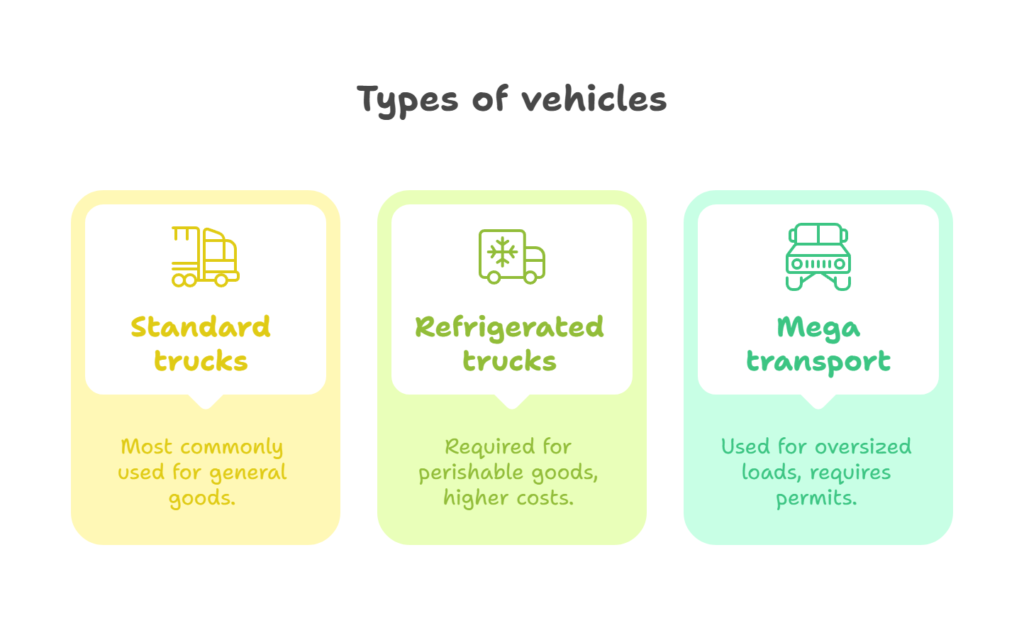
In terms of vehicle types, standard trucks, with a capacity of 24 tons, are most commonly used for general goods (such as textiles or car parts). For perishable goods, refrigerated trucks are used, which are 20-30% more expensive. There are also mega transports, which are vans up to 40 tons, used for industrial equipment, require special permits and are usually used for bulky loads.
Different truck types and routes mean different rates. In terms of transport costs, for example, for Germany they vary between €1,200 and €1,800 per truck, and for Spain, the long distance of around 2,500 km makes the rates higher, between €2,500 and €3,500 per truck.
Specific challenges in road transport
Romania's road transport to the European Union faces several challenges that can significantly influence delivery times. In terms of infrastructure, only 30% of the planned motorways have been completed, affecting in particular the routes to Hungary (A10) and Moldova (A7). In some regions, the lack of completed motorways may cause delays, especially on national roads.
In addition, EU borders remain a point of tension. Customs clearance, such as those at Nădlac or Vărșand, can cause delays of up to 1-4 hours, especially for non-EU shipments, such as those bound for the UK after Brexit. EU regulations, such as the use of digital tachographs, limit driving time to 9 hours a day, which can affect urgent deliveries. Also, environmental taxes, such as the MAUT tariffs applied in Austria or Germany (between 0.15-0.30 EUR/km), can significantly increase transport costs.
Customs formalities and EU rules
Another important aspect influencing delivery time is the border crossing process and customs formalities. Although Romania is part of the European Union and most goods move freely between member states, there are still certain regulations and procedures that can affect delivery times, especially for certain types of goods.
Depending on the nature of the cargo (e.g. dangerous goods, foodstuffs or medicines), it may be necessary to obtain special authorizations or complete additional documentation to cross the border. Also, in some cases, additional customs checks may lead to delays.
At Paneuropa Logistics we take care of everything to ensure fast and smooth deliveries. For precise information about formalities and regulations, we encourage you to contact our team for customized offers.
Weather and seasonal conditions
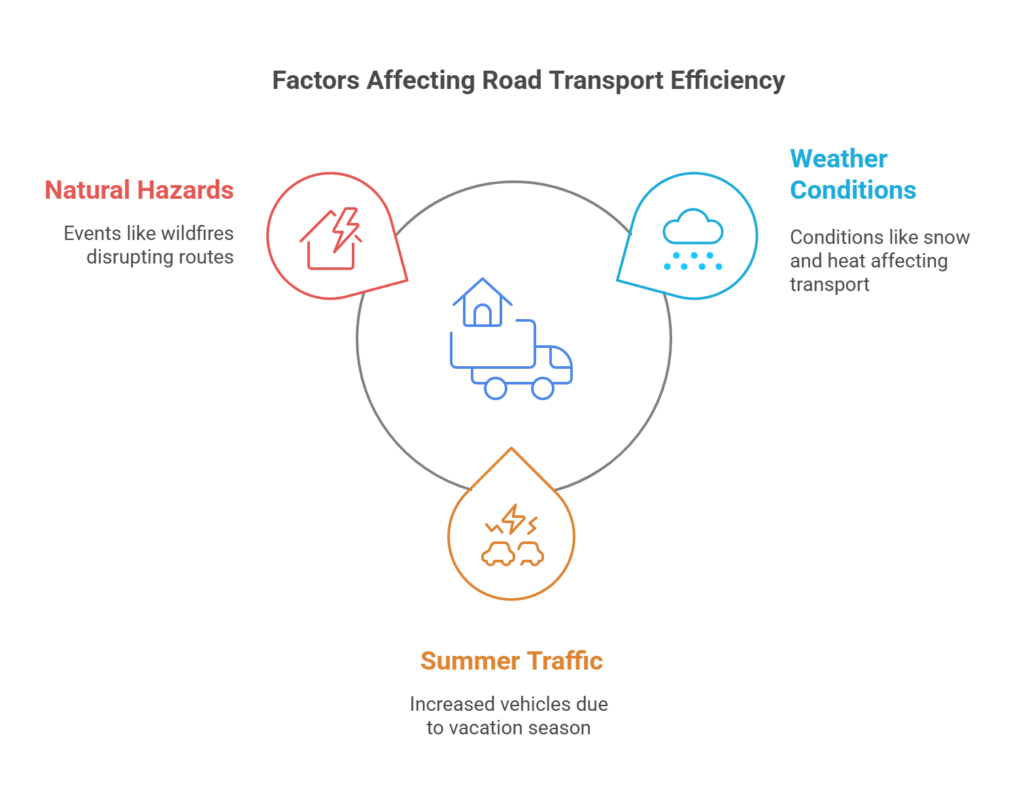
Weather conditions can have a significant impact on road transport across the European Union. In addition to harsh winters that can delay deliveries in some northern regions, extreme summer conditions such as high temperatures or heatwaves can affect the performance of transport vehicles, especially when transporting temperature-sensitive goods.
In the summer season, certain regions of Europe, especially the south and south-east, can experience heavy traffic due to summer vacations, which can lengthen delivery times. There are also risks of fires or storms which can interfere with transportation routes and cause route diversions or delays.
Weather can be a major challenge in Romania too. For example, in winter, snow in the Predeal Pass or flooding in the Danube Delta can block traffic on main roads, causing delays of up to a full day.
Logistics system in the country of destination
Another important factor influencing delivery time is the logistics system in the destination country. Although most countries in the European Union have an efficient logistics system, some areas may have less developed infrastructure or fewer distribution centers. These differences can influence the speed of delivery of goods.
In some countries, such as Germany or France, the infrastructure is well in place and deliveries can arrive quickly. In other cases, depending on the exact location in the destination country, deliveries may take longer due to internal delivery processes or difficult access to certain regions.
Optimizing road transport
In order to counter these challenges and improve delivery efficiency, transportation companies can use various technological and operational solutions. The implementation of TMS (Transport Management Systems) helps to optimize routes in real time and avoid congestion, using advanced software such as Trans.eu, used by 30% of Romanian companies. These systems can also integrate weather data or border information to quickly adjust routes and minimize delays.
IoT technology is also a valuable tool for monitoring transportation. Sensors for temperature, humidity and GPS location (such as Sigfox or LoRaWAN) allow real-time tracking of the vehicle, ensuring that the transport is on schedule and in optimal conditions.
In addition, operational strategies such as cross-docking and groupage can help reduce warehousing times and costs by combining goods from multiple customers into a single truck. These solutions are already being used by large Romanian companies such as Kaufland and Dedeman.
At border level, solutions such as TRANSIT T1, a customs procedure for non-EU goods, can reduce waiting time at customs by up to 50%. The Authorized Economic Operator (AEO) program also allows priority customs inspections, significantly improving transit times.
Although the general lead time for delivery from Romania to most countries in the European Union is 24-48 hours, there are many factors that can change this. For a more accurate time estimate and full assistance in planning your shipment, contact the Paneuropa Logistics team, and we will take into account all destination and cargo specific factors to make you a customized offer.
Our team is available to give you detailed information about available routes, traffic conditions and country-specific customs regulations. This will allow you to plan your shipment efficiently and get your delivery as quickly as possible without any unpleasant surprises.

Here is a list of frequently asked questions (FAQs) and answers

Founder and CEO of Paneuropa Logistics
I am György Bokor, Founder and CEO of Paneuropa Logistics. I have been active in the logistics industry for more than 20 years, focusing on international transportation, freight forwarding, last-mile deliveries and customs services. I am passionate about developing efficient solutions that connect businesses across Europe.