
Fast freight transport between Romania and Austria is essential for efficient trade relations, offering fast delivery, optimized costs and logistical security. Find out why companies choose this solution to stay competitive in the market.
Main advantages:
- Fast delivery in 24-48h and real-time tracking;
- Reduce costs through logistics optimization;
- Operational flexibility and short transit times;
- Sustainable solutions (e.g. CO₂ reduction, LTL/FTL).
Today, Austria-Romania freight transport is a vital component of international trade, with road transport accounting for more than 70% of all freight in Romania.
Given the close economic ties between the two countries, choosing the right method of transportation becomes crucial to the success of your business. Factors such as distance, nature of goods and budget also play a crucial role in the road haulage decision-making process.
Through this guide, we will explore together the most efficient solutions for freight transport between Romania and Austria, focusing on optimizing costs and maximizing operational efficiency. We will analyze the different options available and provide practical information to help you make the best decision for your business.
Romania's trade relationship with Austria: an opportunity for growth
Economic relations between Romania and Austria are an important pillar for the economic growth of both countries. Austria ranks second among foreign investors in Romania, with investments of over €10 billion. This strong presence illustrates the confidence of Austrian companies in the potential of the Romanian market.
In terms of trade, the total volume between the two countries amounted to €4.5 billion in 2021, of which two thirds were imports from Austria and one third Romanian exports to Austria. Austrian companies in Romania generated a turnover of 100 billion lei (around €20 billion) in 2021, accounting for 5% of the country's total turnover and providing jobs for around 65,000 employees.
In terms of export structure, Romania sends to Austria mainly machinery, appliances, electrical equipment, base metals and metal articles, footwear, hats, umbrellas, umbrellas, walking sticks, wood and furniture. On the other hand, Austria exports to Romania machinery and plants, vehicles and components, cast iron, steel and metal products, food and beverages, medical and pharmaceutical products.
Also, Romania ranks 14th among Austria's top export partners and 19th for imports, which shows the growing importance of the Romanian market for Austrian exporters.
In the context of freight transport, these figures underline the need for efficient and fast transport services between the two countries. As a country with a high export share (60.8% of GDP in 2023), Austria's economy depends on efficient logistical connections with its trading partners, including Romania.
Cross-border cooperation between Romania and Austria offers significant opportunities for economic growth. According to estimates, removing just 20% of the existing obstacles to cross-border cooperation could generate a 2% increase in the GDP of the border regions and more than 1 million additional jobs.
Thus, rapid freight transport between Romania and Austria is not just a logistical service, but a strategic factor for the development of bilateral trade relations, with the potential to stimulate economic growth in both countries.
The competitive advantages of fast freight
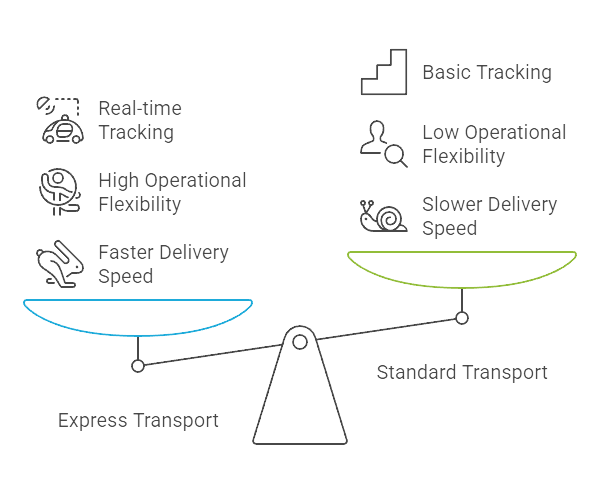
Fast freight transportation between Romania and Austria offers companies a key strategic advantage in today's competitive economic environment. The fundamental difference between express and standard shipping lies in the speed of delivery, a factor that has a decisive influence on the customer experience and the ability of companies to respond to market demands.
Speed and reliability are the most obvious benefits of express transportation. While standard delivery takes between 4-7 working days, express can reduce this to as little as 24-48 hours for European routes. This significant reduction in transit time allows businesses to respond promptly to urgent customer needs, increasing customer satisfaction by up to 35%.
Operational flexibility is another major competitive advantage. Express transportation services allow delivery date or location to be changed at short notice and facilitate access to hard-to-reach areas such as construction sites or rural regions. Delivery flexibility also contributes not only to increased customer satisfaction but also to attracting more orders.
Real-time shipment monitoring is an important customer benefit. Advanced GPS tracking systems available 24/7 provide complete transparency on the status and location of goods, reducing the anxiety associated with urgent shipments.
For time-sensitive goods, fast transportation is becoming indispensable. Advanced route optimization algorithms reduce fuel consumption and minimize CO₂ emissions, making express transport not only fast but also environmentally efficient.
From a cost perspective, even though express transportation involves higher charges, the benefits may outweigh the extra expense. Companies using optimized courier services can reduce delivery costs by up to 50% through smart service aggregation and route optimization.
As a result of these advantages, fast freight transport between Romania and Austria is not just a logistical option, but a strategic tool that can transform the way businesses operate and compete in the marketplace. In an economic context where time is becoming more and more valuable, express services offer an optimal balance between speed, efficiency and reliability.
Optimizing costs in road freight transport Romania-Austria
Reducing logistics costs is a priority for companies transporting goods between Romania and Austria. Cost optimization strategies can bring significant savings, increasing the competitiveness of your business.
Consolidated freight forwarding is one of the most efficient logistics strategies, involving combining several smaller shipments into one larger shipment. This approach is particularly advantageous for companies that don't have enough cargo to fill an entire container, allowing them to share space and transportation costs.
By consolidating shipments, you can significantly reduce transportation costs while ensuring that your goods are transported efficiently. A major advantage of this method is cost-effectiveness: by sharing space in a container with other companies, you benefit from lower rates compared to traditional full container loads.
LCL (Less than Container Load) and LTL (Less than Truck Load) solutions allow you to pay only for the space occupied by your goods, making them economical choices for small and medium-sized shipments.
Intermodal transport also combines multiple modes (road, rail, sea) for cost-effective delivery. These systems reduce fuel consumption and minimize CO₂ emissions, making transport not only economical but also environmentally friendly.
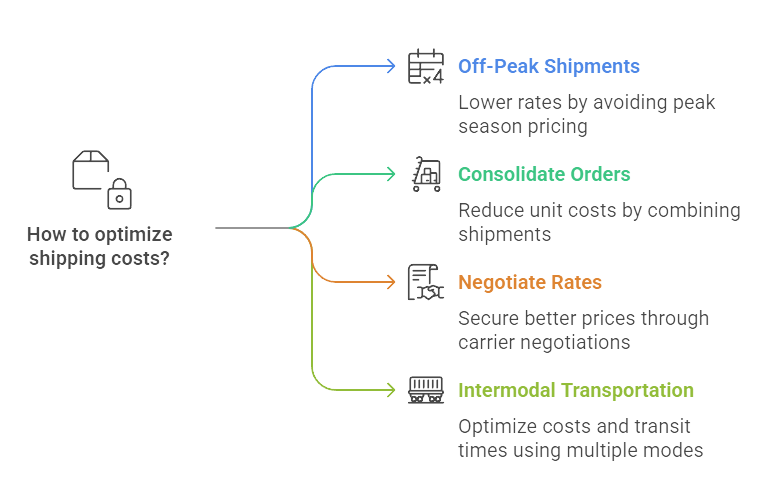
To optimize costs, you can adopt the following practical strategies:
- Plan off-peak transport to get lower fares
- Consolidate small orders into one shipment to reduce unit costs
- Negotiating tariffs with carriers to ensure the best prices
- Using intermodal transport to optimize transit costs and times
Advanced route optimization algorithms contribute significantly to reducing costs by calculating the most efficient routes and avoiding congested areas. For routes between Romania and Austria, this is particularly important given the Alpine infrastructure which can generate additional costs.
Therefore, choosing consolidated transport services and implementing cost optimization strategies is not only a way to save money, but also a strategic tool that can transform the way you operate and your competitiveness in the market.
Conclusion
Fast freight transport between Romania and Austria is more than just a logistical service - it is an essential strategic factor for modern business development. The strong trade relations between the two countries, demonstrated by the impressive volume of trade and the significant presence of Austrian investments in Romania, underline the need for efficient and fast transportation services.
The speed, reliability and flexibility of express transportation gives companies clear competitive advantages in the marketplace. Investing in express services therefore turns into a long-term benefit, directly contributing to customer satisfaction and business growth.
However, success in freight transport depends not only on speed, but also on the ability to optimize costs through smart strategies. Consolidating loads, choosing the right time for transportation and using intermodal solutions can significantly reduce logistics costs while maintaining high quality of service.
Moreover, companies that adopt these modern transportation practices not only save resources but also strengthen their position in the international market. Choosing a reliable logistics partner who understands the specifics of the Romania-Austria route and can offer customized solutions thus becomes crucial for the success of international transport operations.
If you are looking for a reliable partner for fast and safe transportation of goods between Romania and Austria, Paneuropa Logistics offers you optimal solutions tailored to your needs. With extensive experience and advanced tracking technologies, we guarantee fast, safe and efficient deliveries. Contact us today to discover how we can support your business!
Here is a list of frequently asked questions (FAQs) and answers

Founder and CEO of Paneuropa Logistics
I am György Bokor, Founder and CEO of Paneuropa Logistics. I have been active in the logistics industry for more than 20 years, focusing on international transportation, freight forwarding, last-mile deliveries and customs services. I am passionate about developing efficient solutions that connect businesses across Europe.