
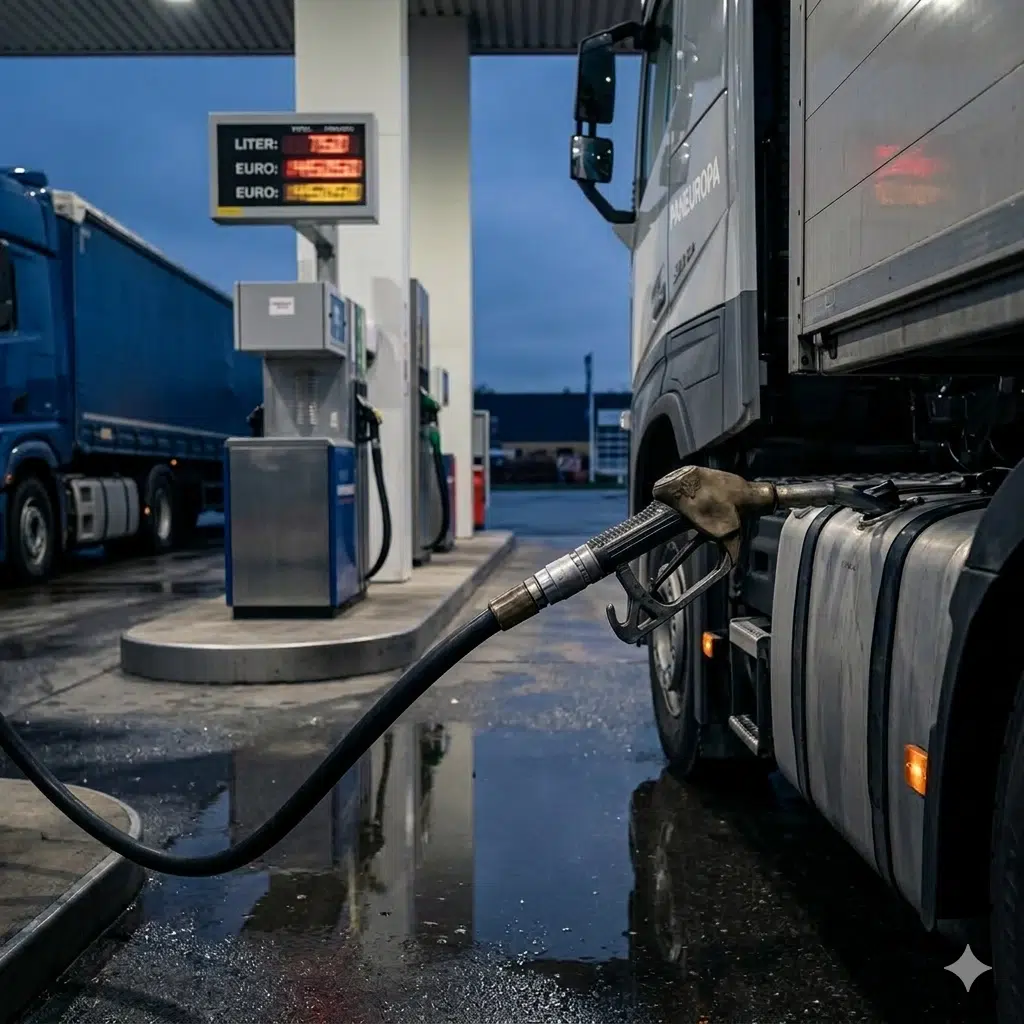
Rising fuel prices, driven by geopolitical tensions in the Middle East and the conflict in Iran, are having a major impact on road freight transport and the economy as a whole. The increase in operating costs directly affects transport companies and is reflected in the final prices of products. In this context, Paneuropa Logistics SRL is adopting a strategy focused on stability and efficiency. Here are the key points:
- Rising fuel prices directly affect transportation costs, as fuel accounts for up to 60% of total expenses
- Most companies respond by raising prices, which leads to a ripple effect of price increases and inflation
- Paneuropa Logistics SRL maintains stable rates, offering predictability and a competitive advantage to its customers
- The company's strategy aims to increase business volume to offset lower margins
- Route optimization, driver training, and digitization help reduce operating costs
- A long-term approach strengthens the company's reputation and fosters stable business relationships
The economic context and its impact on road transport
In the current economic climate, marked by geopolitical instability and major fluctuations in international markets, the conflict in Iran is one of the key factors driving up fuel prices. The Middle East plays a vital role in global oil production, and any tension or conflict in the region has an immediate impact on the global energy market. Thus, increases in the price of crude oil are quickly reflected in the price of diesel, directly affecting economic sectors dependent on transportation, particularly road freight transport.
Road freight transport is a cornerstone of the European economy, ensuring the constant flow of goods between producers, distributors, and consumers. Approximately 70% of all goods in Europe are transported by road, underscoring the importance of this sector. Under these circumstances, any increase in operating costs quickly ripples throughout the entire economy.
One of the most significant cost factors in road transport is fuel. Typically, it accounts for between 30% and 50% of the total cost of a trip. During energy crises, this percentage can rise to over 60%, placing enormous pressure on transport companies. Sudden increases in diesel prices lead to reduced profit margins and make it difficult to maintain economic sustainability.
Traditionally, transportation companies respond to these increases by raising their rates. This decision is economically justified, as it allows them to pass on the additional costs to the customer. However, this approach has a ripple effect. Higher transportation rates lead to higher prices for final products, affecting consumers and contributing to inflation.
The effects of rising fuel prices are not limited to the transportation sector. They affect the entire supply chain. Food, consumer goods, and construction materials are becoming more expensive because transportation costs are factored into the final price. Thus, rising fuel prices contribute to a decline in purchasing power and a slowdown in economic growth.
Paneuropa Logistics SRL's Strategy in the Context of Rising Costs
In this challenging environment, Paneuropa Logistics SRL is taking a different approach than most of its competitors in the market. The company has decided not to raise its shipping rates, despite rising fuel costs. This decision reflects a long-term strategic vision and a strong customer focus.
The first compelling argument in favor of this decision is customer loyalty. In an unstable economic environment, customers seek stability and predictability. By keeping rates constant, the company offers a major advantage to its partners, who can plan their costs more effectively and avoid the risks associated with price fluctuations.
The second argument is the competitive advantage. At a time when most transport companies are raising their rates, Paneuropa Logistics SRL becomes an attractive alternative for customers. This positioning allows the company to attract new contracts and expand its customer base.
A third important argument is the increase in business volume. Even if the profit margin per shipment is lower, the increase in the number of orders can offset this difference. In this way, the company can maintain its profitability and strengthen its market position.

Measures for optimization and operational efficiency
To support this strategy, Paneuropa Logistics SRL is implementing effective cost-optimization measures. These include intelligent route planning, reducing empty runs, and utilizing modern fleet monitoring technologies. These measures help reduce fuel consumption and increase operational efficiency.
Driver training also plays a key role. An economical driving style can reduce fuel consumption by up to 10–15%. Therefore, investing in staff training is an effective way to cut costs.

Another important aspect is the digitization of processes. The use of advanced IT systems enables real-time monitoring of consumption, route optimization, and shorter delivery times. These technologies help streamline operations and reduce operational costs.
Long-term benefits and strategic conclusions
In the long term, the price stabilization strategy can strengthen the company’s reputation. Paneuropa Logistics SRL will be perceived as a stable and reliable partner, capable of providing quality services at consistent prices. This positive image can foster customer loyalty and attract new business opportunities.
This strategy also contributes to market stability. Rather than fueling a spiral of rising prices, the company takes a responsible approach, maintaining economic balance and protecting customers from excessive price increases.
Another relevant point concerns long-term relationships. In the transportation sector, stable and lasting partnerships are essential. By maintaining its rates, the company demonstrates reliability and commitment to its partners, which strengthens business relationships.
Last but not least, this strategy reflects the company’s ability to manage resources efficiently and adapt to market conditions. Rather than reacting impulsively to rising costs, Paneuropa Logistics SRL takes a strategic approach based on analysis and planning.
In conclusion, the rise in fuel prices caused by the conflict in Iran is having a major impact on road freight transport and the global economy. However, Paneuropa Logistics SRL demonstrates that through a well-thought-out strategy based on efficiency, stability, and customer focus, these challenges can be transformed into real opportunities for growth. Maintaining prices is not only an economic decision but also a strategic one that can yield significant long-term benefits.
Frequently Asked Questions About the Impact of Rising Fuel Prices on Freight Transport

Founder and CEO of Paneuropa Logistics
I am György Bokor, Founder and CEO of Paneuropa Logistics. I have been active in the logistics industry for more than 20 years, focusing on international transportation, freight forwarding, last-mile deliveries and customs services. I am passionate about developing efficient solutions that connect businesses across Europe.